



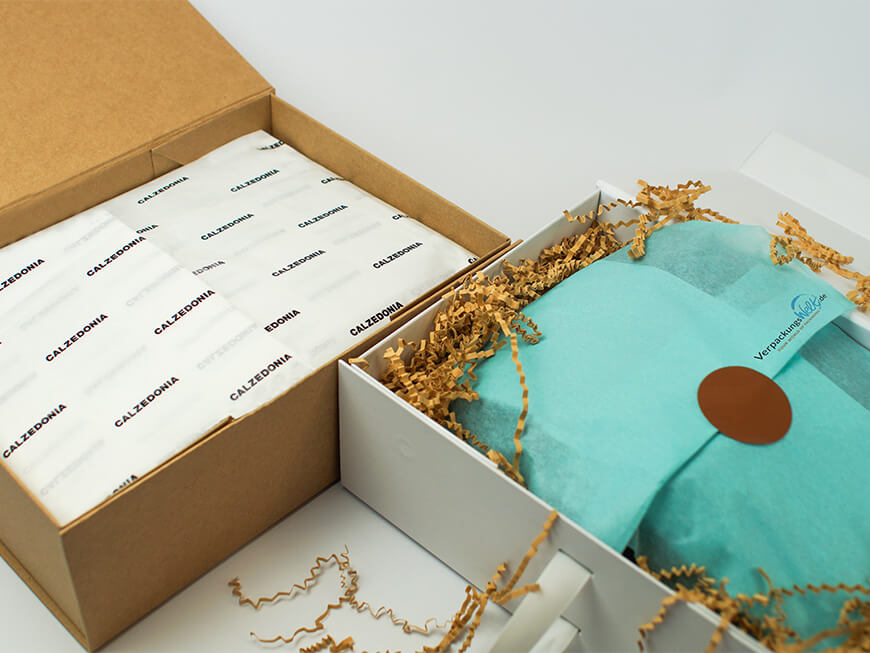
Without the right protection, product damage can quickly occur during shipping. That's why one thing counts above all: safety. Otherwise, customer satisfaction decreases, return costs increase and your brand image even suffers. Packaging fillers such as bubble wrap, foam or filling paper are the best preventative measure against damage in transit, as they cushion sensitive products and hold them securely in the shipping carton. This avoids unnecessary complaints due to damaged items being delivered.
Different types of packaging fillers
Different fillers are more or less suitable for certain products. Here is an overview of the most common types of filler materials:
- Air cushions: Suitable for light to medium-weight products as they save space and cushion effectively.
- Foam: Excellent for sensitive and particularly valuable items. The foam fits snugly around the product, effectively protecting it from both light and heavy shocks.
- Packing chips (Flo-Pak): Flexible to use and well suited for shipping products of various shapes and sizes. They fill all cavities efficiently and can be reused many times.
All different packaging fillers offer different advantages — the best choice depends on your particular product!
How fillers prevent product damage
When it comes to preventing product damage, professional packaging fillers play a key role. They absorb shocks, protect against pressure and fix products inside boxes, minimizing unwanted movement during transport. Especially for fragile or highly sensitive goods such as glass, cosmetics or electrical products, choosing the right filling material is crucial to prevent potential damage during transportation.
Reduce damage claims with the right packaging
Reduce returns and complaints by using the right packaging filler for your product. This will also reduce customer service costs and save you avoidable claims for damages from your customers. Companies that use high-quality packaging fillers therefore not only benefit from safe shipping, but often also have an image advantage — and in a cost-effective way. Bear in mind that transport damage usually costs more than the regular investment in good filling materials.
Best practices for the use of packaging fillers
Follow these best practices to get the most out of your packaging fillers:
- Always place your products in the center of the box and surround them completely with filler material.
- Fix light products with air cushions if possible and heavy ones with foam or dense packing chips.
- Pad fragile products and, if in doubt, use a little more filling material rather than too little.
- Avoid cavities so that nothing can slip in the box.
- For smaller or delicate products, it is advisable to use additional tissue paper for protection and visual enhancement.
You can find a comprehensive range of our best filling materials here: Packaging filler and filling material
FAQ — Frequently asked questions about packaging fillers
- How do air cushions protect products?
- Air cushions have a shock-absorbing effect and prevent your products from being damaged if they are shaken in the box. They provide ideal protection for most products.
- What is the difference between foam and packing chips?
- Packing chips can fill cavities and can be used flexibly for a wide variety of products. Foam, on the other hand, adapts precisely to your product and offers selective protection.
- How can I reduce transport damage with the right filling material?
- By choosing the right filling material for the weight and sensitivity of your product. Always make sure to fill cavities completely so that products are fixed securely and cannot move.
- Can I reuse packaging fillers?
- Most packaging fillers can be used several times as long as they remain intact. This saves costs and conserves important resources.
- What types of packaging fillers are best for fragile items?
- For fragile products, we primarily recommend foam inserts or dense packing chips. These provide optimum cushioning for your products and adapt flexibly to delicate surfaces.